The Dyeing Process
Dyeing the wool
First stage
Apart from creating the art, this is my second favourite part. Actually starting to transform the wool into different colours!
First of all, I need to discuss the dyes. I wanted at first to use all the natural dyes from the environment. This unfortunately wasn’t practical as I would need huge quantities. Also, some of the colours I needed just were not available locally.
So, I did a compromise and dyed some of the wool with natural material easily available on my property and purchased some dyes online.
I started off with a couple of aluminium pans that we were no longer using. After a while I was able to get a couple more pans too.
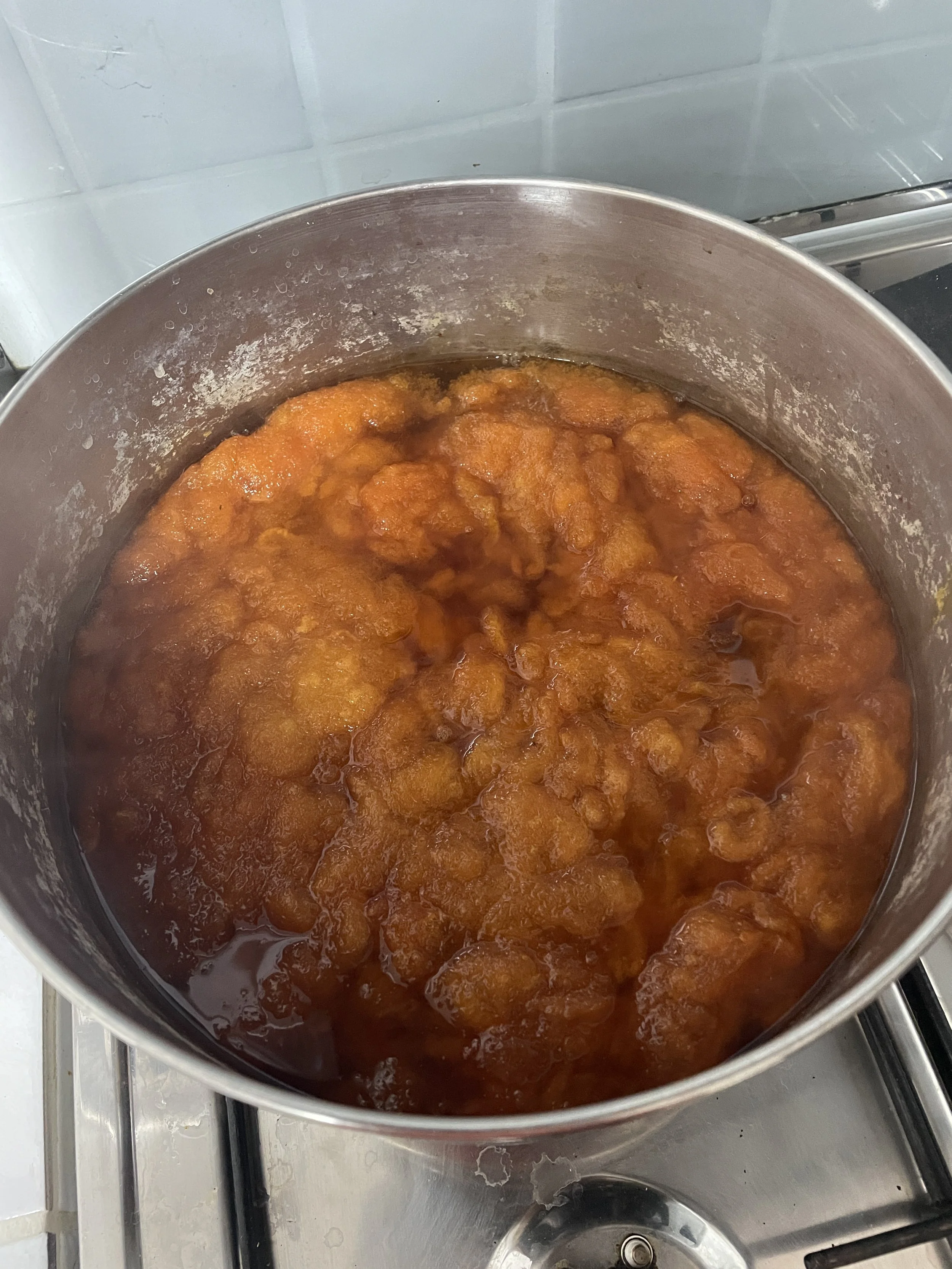
I had to heat up the water so it was hot enough but not boiling as again it would felt the wool. When dyeing naturally I would add the natural product, for example with walnuts from my trees. I would crush them first. Leave them to soak overnight in the pan. Then remove them and heat up the coloured water.
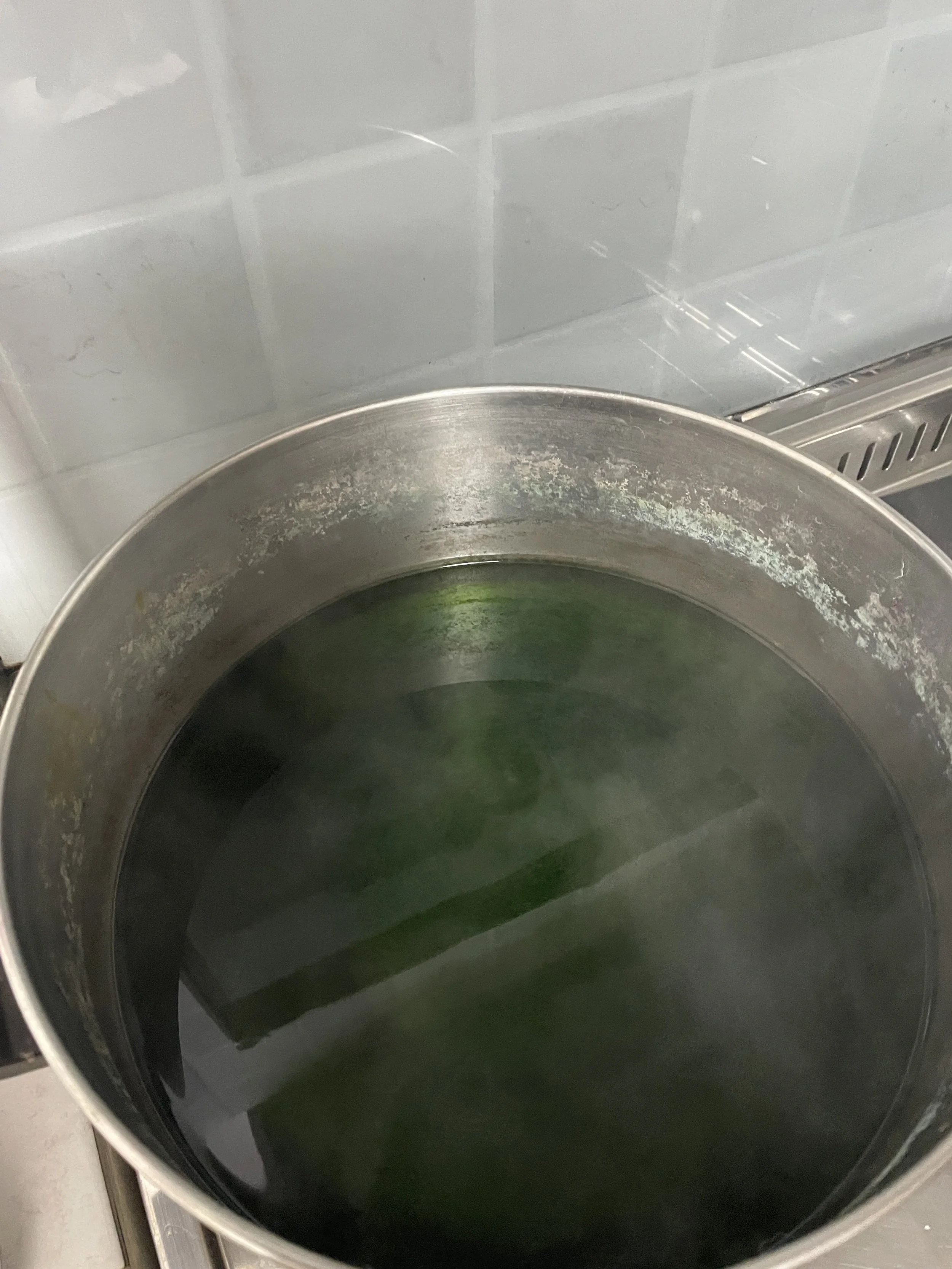
With the bought dyes they could be added directly to the hot water. The photo here shows the green dye.
All videos of the complete process are on my social media channels under Abruzzo Shepherd Art.
Wool preparation
Second stage
After lots of research I realised there are key ingredients required when it came to dyeing wool.
Mordant - which is a chemical substance typically metallic salt that used to fix plant pigments to wool. I purchased a bag of this to fix my natural dyes to my wool.
Acid - This was white vinegar which was available in the supermarket, and is used to fix the purchased acid dyes to the wool.
Iron water - In a jar filled with vinegar, rusty nails were added. Over a number of weeks this creates iron water, that after putting it through a filter to remove any metal filings can help to darken the dyes.
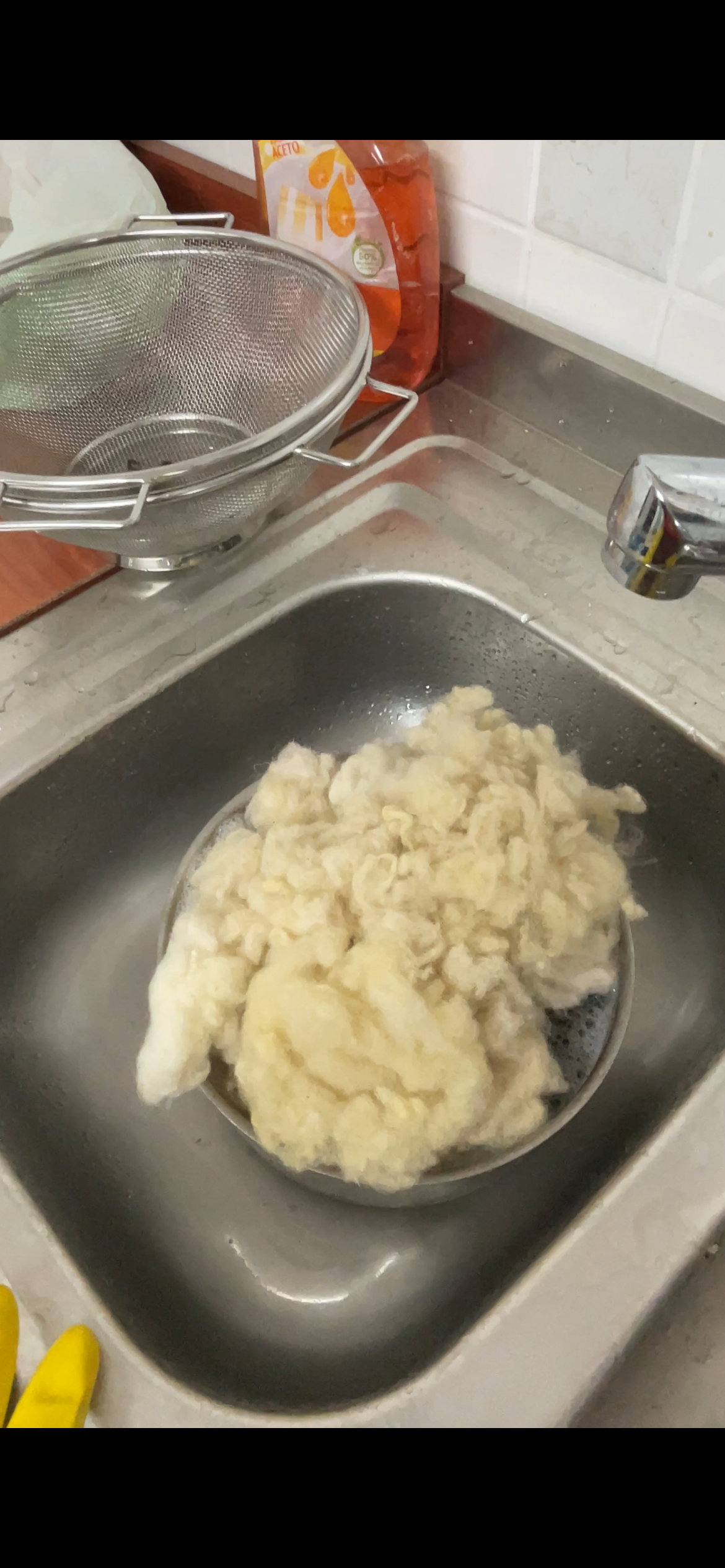
Once I had these ingredients plus the dyes I was ready to go. My first batch of raw wool, I soaked in water with a small amount of dish soap. This prepared the wool for dyeing. Then I added the wool to the hot pan of dye. The wool was left in the pan without moving it for 45 minutes. Any agitation of the wool would cause felting. When using the acid dyes I had to add my vinegar to the dyed water mix. If I was using natural dyes I had to add the mordant.
After 45 minutes the hot water should appear clear as the wool has absorbed the dye.
I would then leave the wool in the pan until it had cooled down to room temperature. The wool then would be washed again in the sink with a small amount of dish soap to remove the smell of the vinegar.
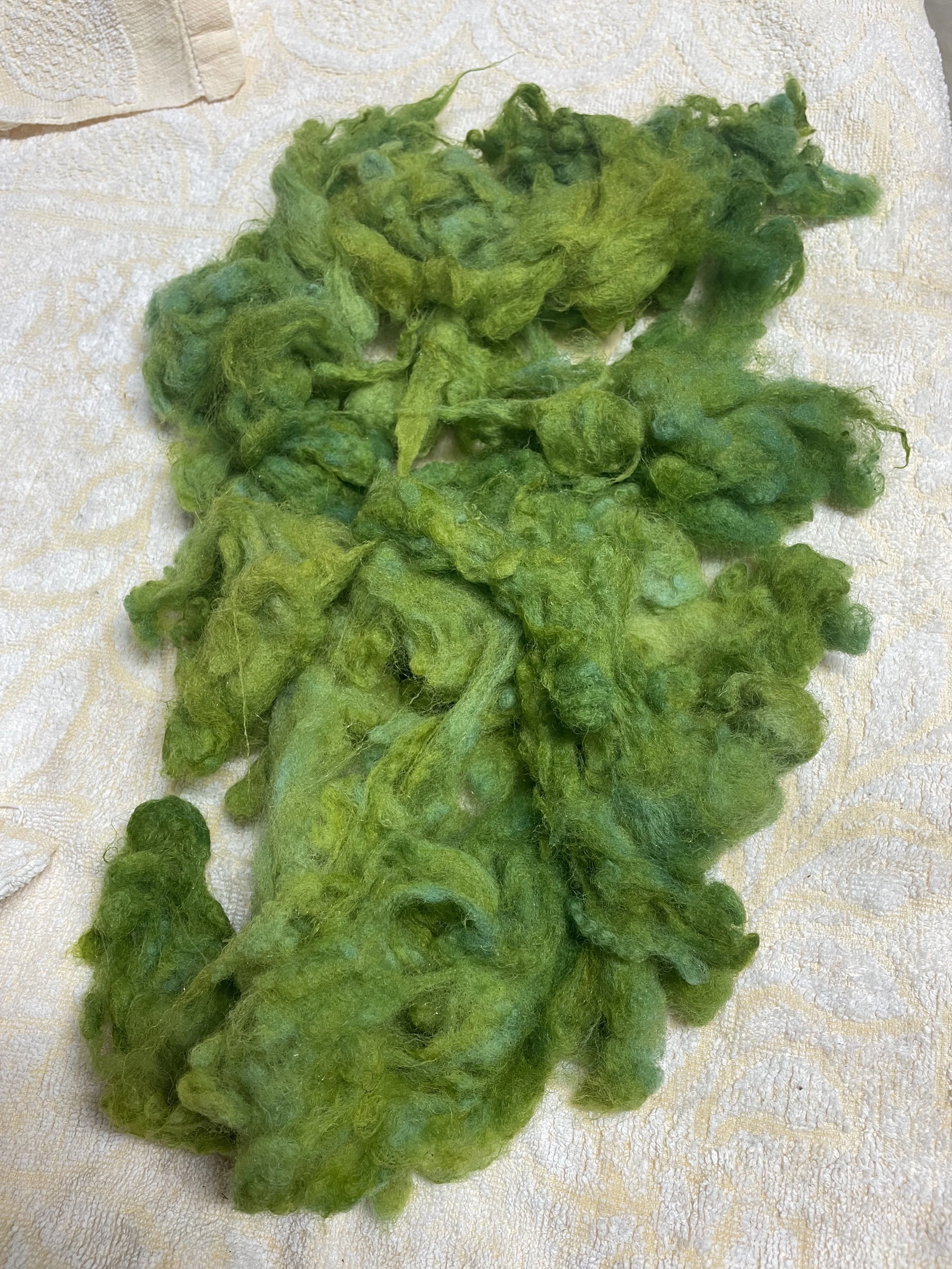
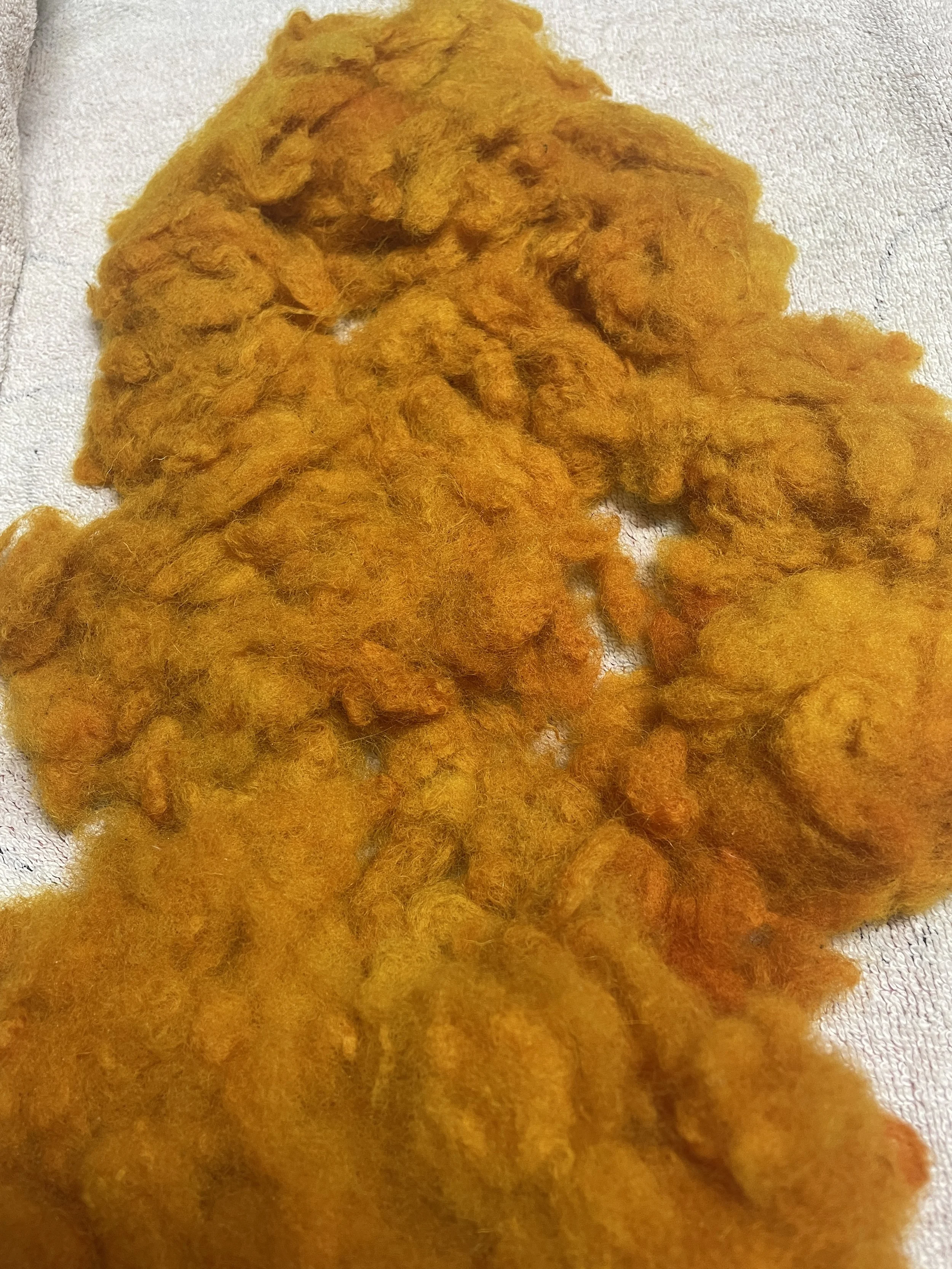
Next, I had to lay the dyed wool out on a towel for it to air dry.
I had mixed results in the early days of dyeing, the bought dyes were very vivid and strong. The natural dyes were more subtle and had patches of dye. Apart from the walnuts which gave the most amazing colour.
All videos of the complete process are on my social media channels under Abruzzo Shepherd Art.