The Washing Process
Sorting the wool
First stage
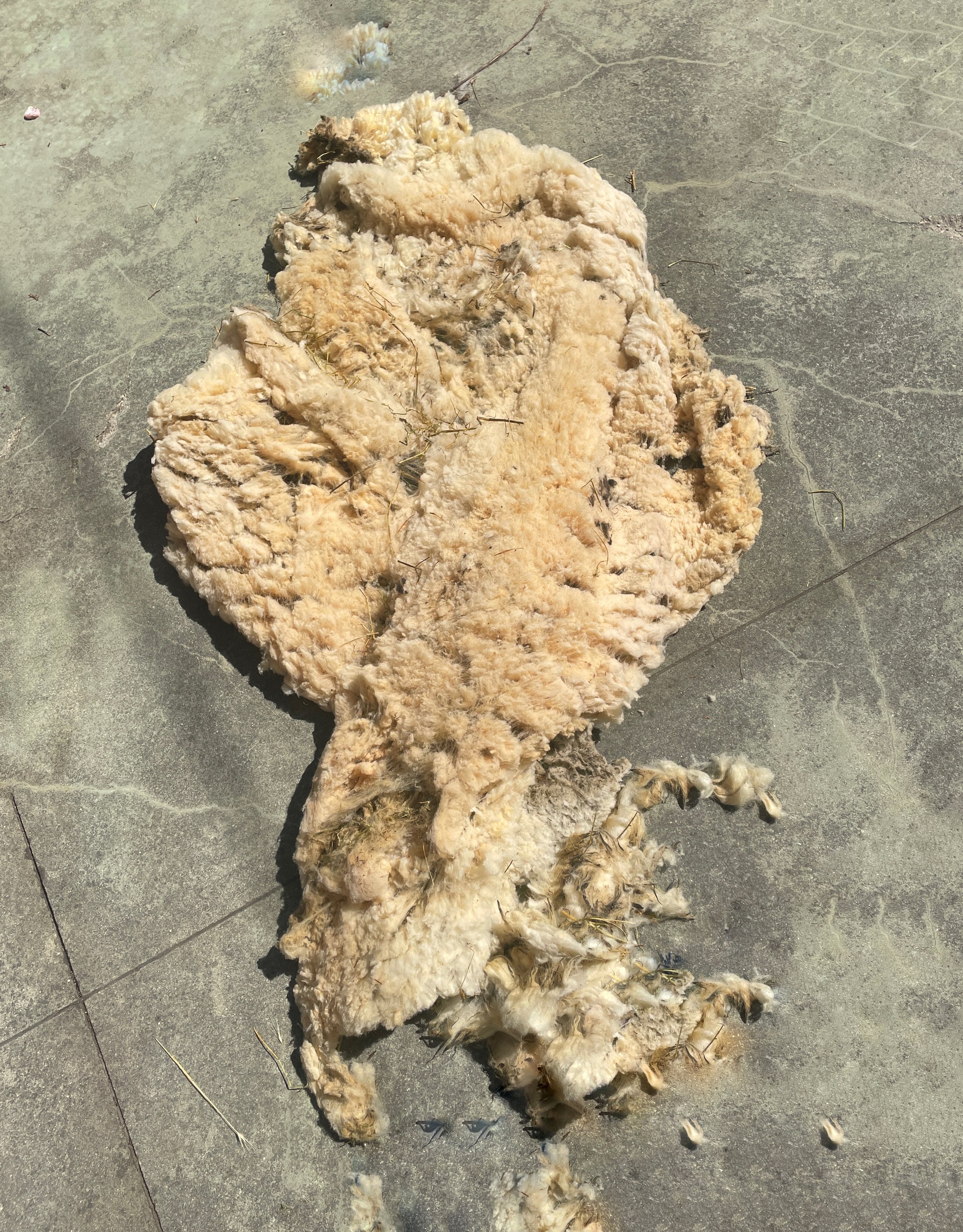
I personally collected the Apennine Pagliarola raw wool from my local farm Masserie Del Parco in Arsita, well known for their Pecorino di Farindola cheese. This type of wool has a coarse structure, great for a rustic finish in needle felting.
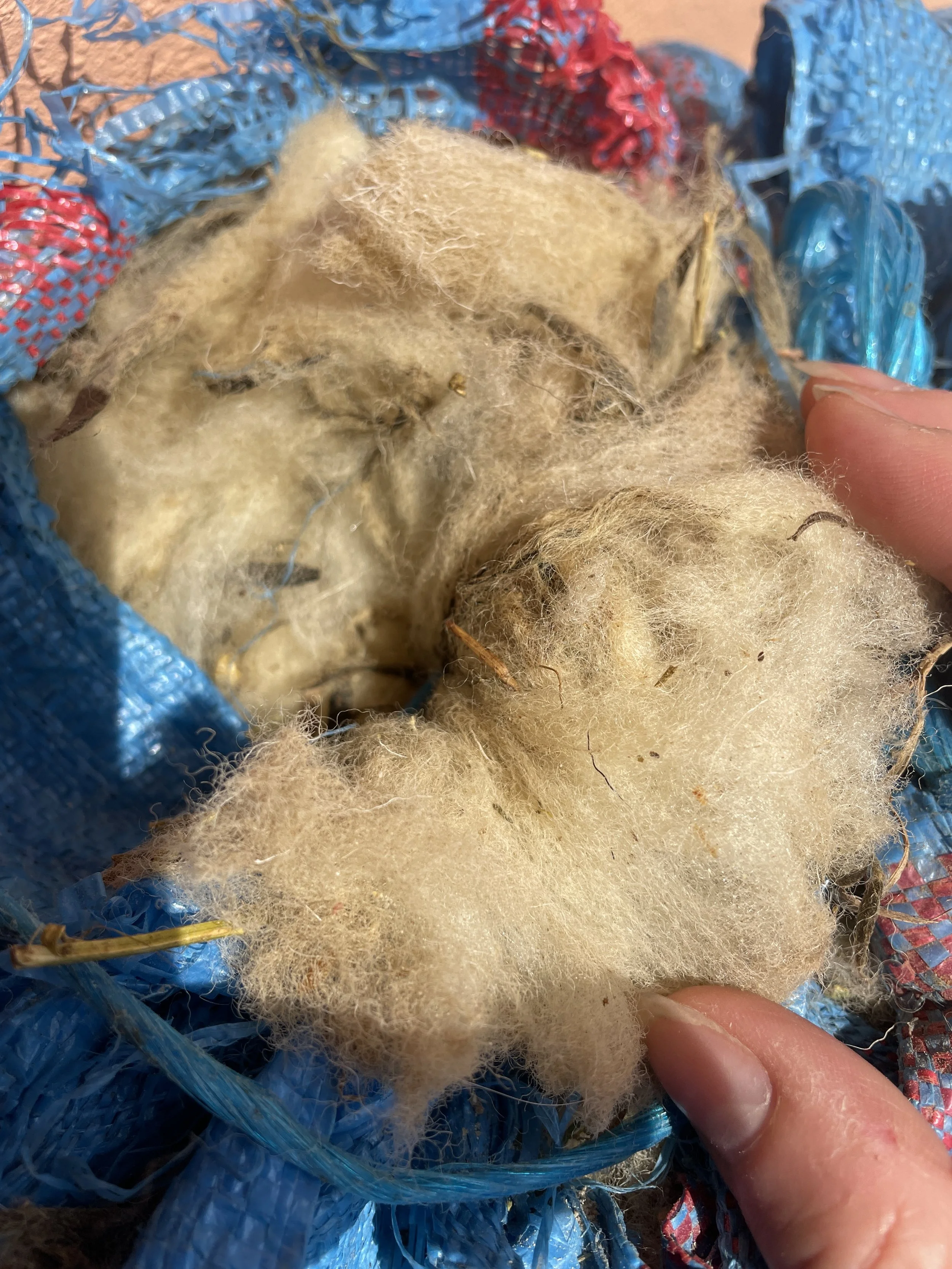
I had to go through the sacks of wool and select the best parts to use for my art. It is at this stage I try to remove much of the straw and dirt prior to washing. The fleece itself smells strongly of lanolin, even at this stage I feel very connected to the wool because I know after processing, it will transform into wonderful material to work with.
All videos of the complete process are on my social media channels under Abruzzo Shepherd Art.
Washing the wool
Second stage
I think I had a bit of of an inexperienced view of how quickly it would take to wash the wool. I imagined I would get lots of wool washed during the day. One batch of wool actually takes me several hours to wash. Each batch is washed in 20 minute intervals. Using a de-greaser that I purchased for the job, hot water that is at least 60 degrees and a thermometer to monitor the temperature of the water.
I now use a box with a lid and cover that over to retain the heat. When filling the box, I add the de-greaser first, then the water and finally the wool. I try to not touch the wool during the cleaning process, as this can lead to felting nor do I pour hot water directly onto it for the same reason. It would be a disaster if the wool felted after all this washing as it would then be useless.
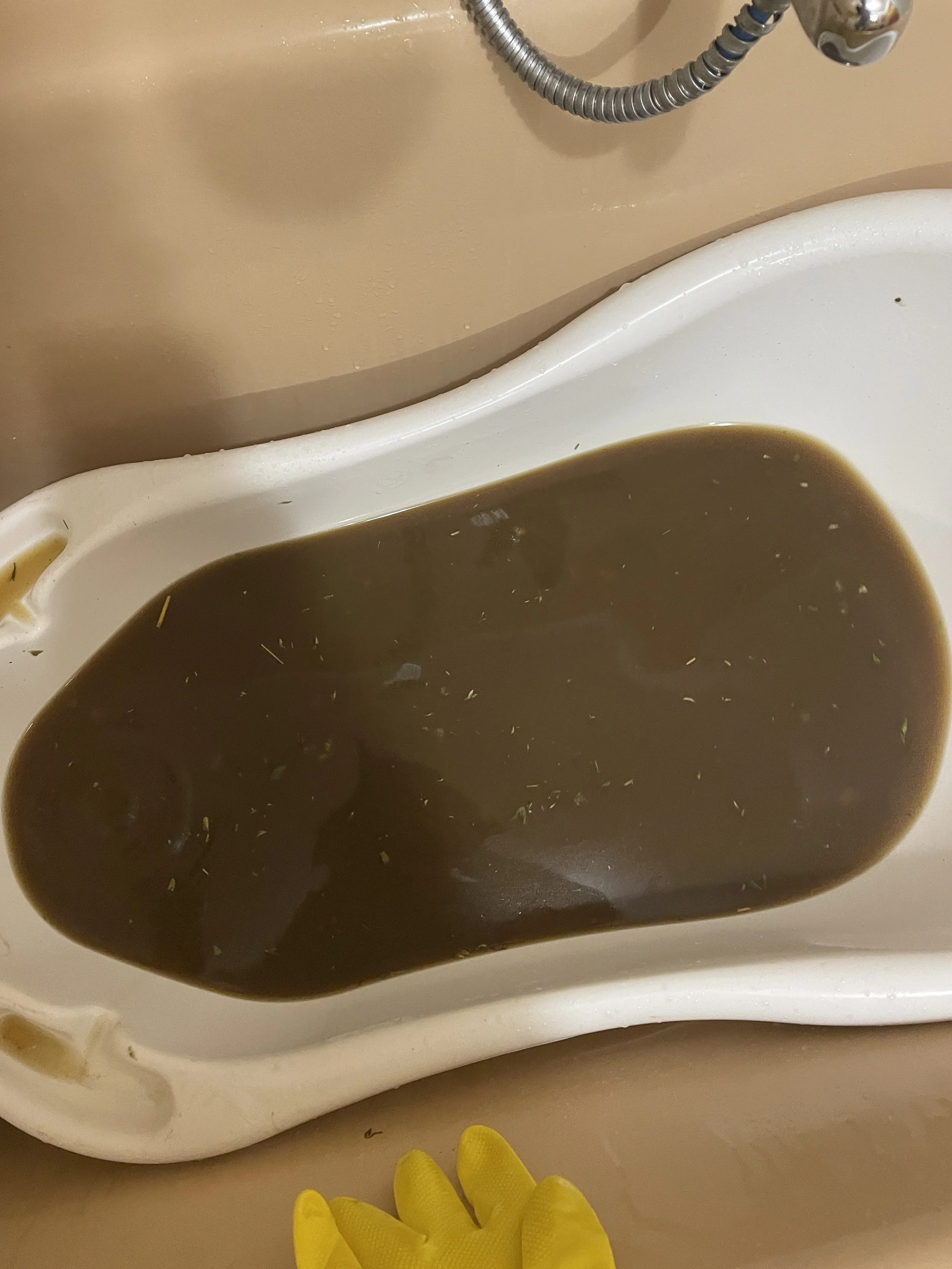
I learnt a lot during the first stages of washing. At first I was washing the wool in the baby bath, in neutral shampoo with no thermometer. I quickly learnt in my trial washes that the temperature rapidly decreased.
So, after lots of reading online I invested in the right cleaning product, and my thermometer to keep watch on how the wool was doing. The colour of the water was very bad as the dirt came out of the wool.
The fleece above (which I did wash) took about four hours to clean! It is back breaking work and in the heat of the Italian summer isn’t ideal but the job needs doing.
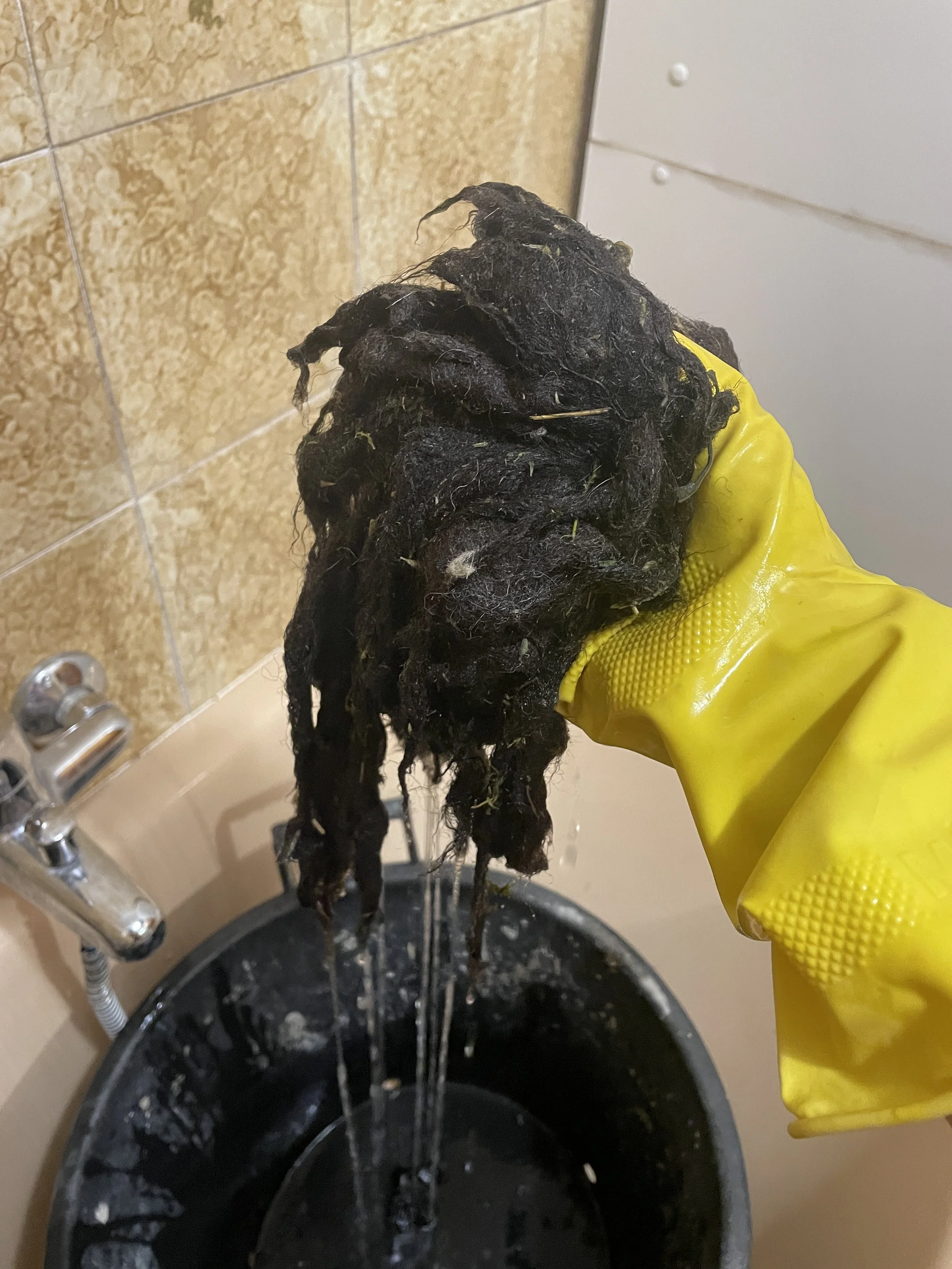
Once the wet wool is clean, I had to support it when removing from the water. This is to stop the fibres being damaged whilst being handled. Then, I put it inside a big duvet cover and it is hung outside to dry. Each day I remove the wool from the cover, tease the fibres to make sure all of the wool is drying evenly.
All videos of the complete process are on my social media channels under Abruzzo Shepherd Art.
Brushing/Carding the wool
Fourth stage
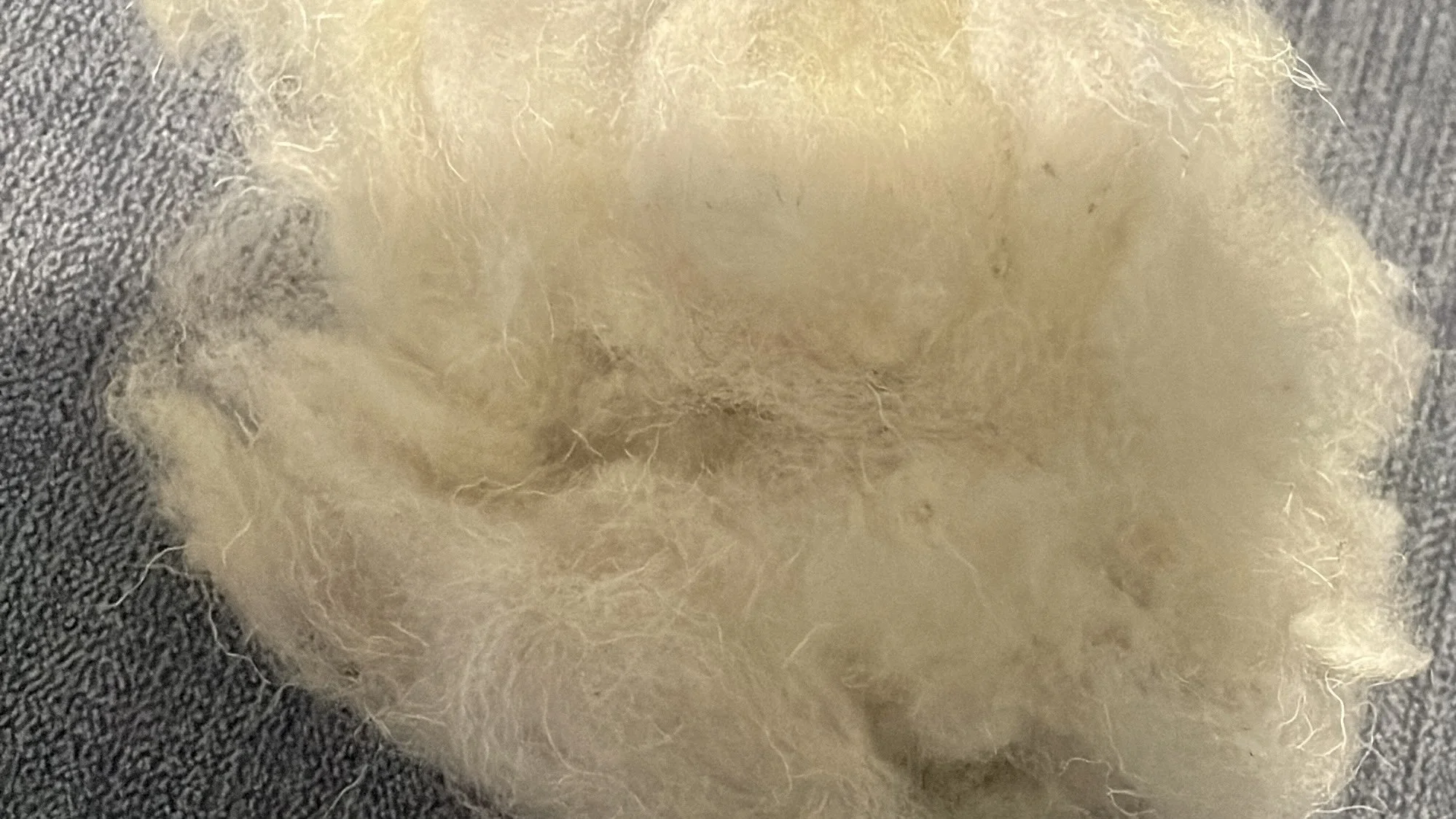
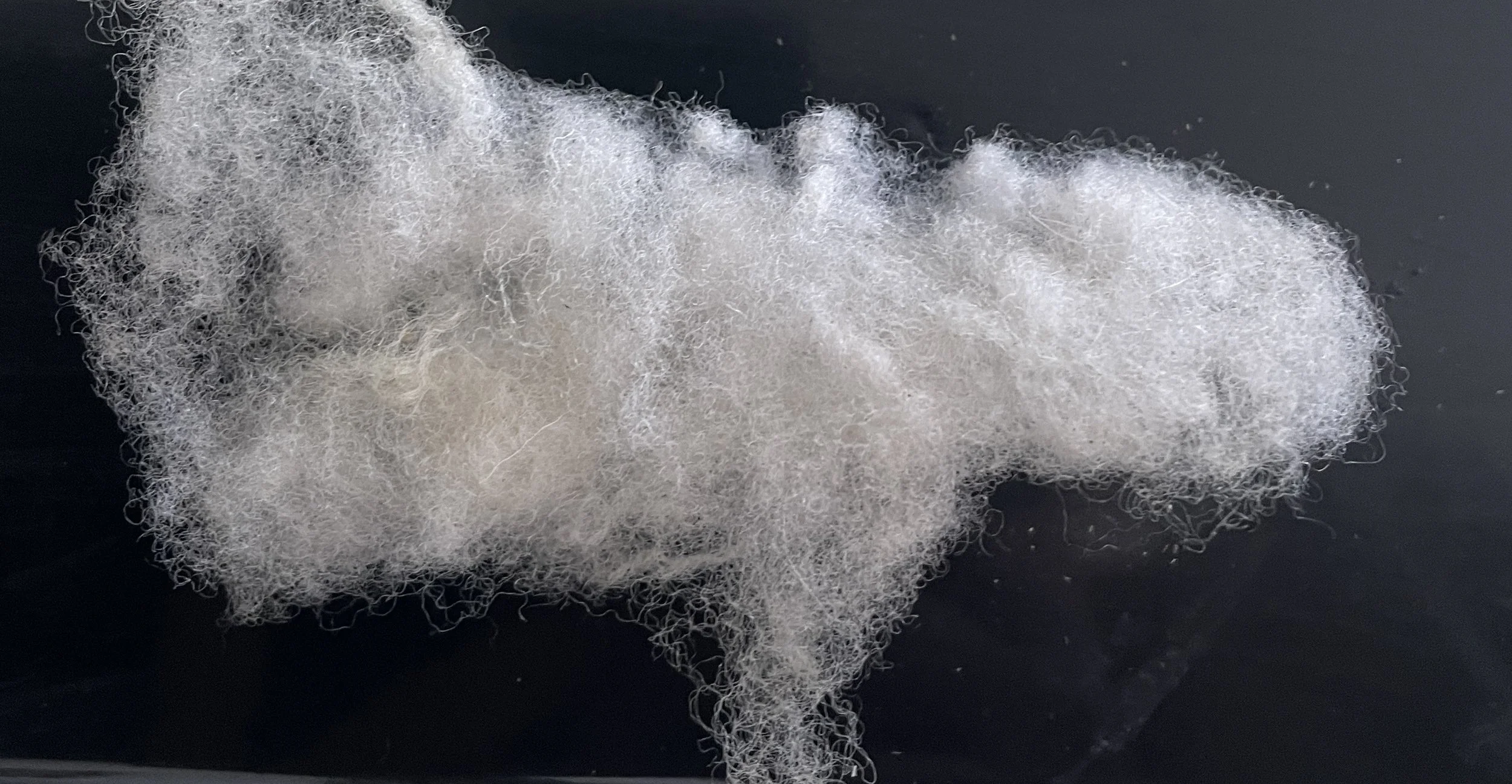
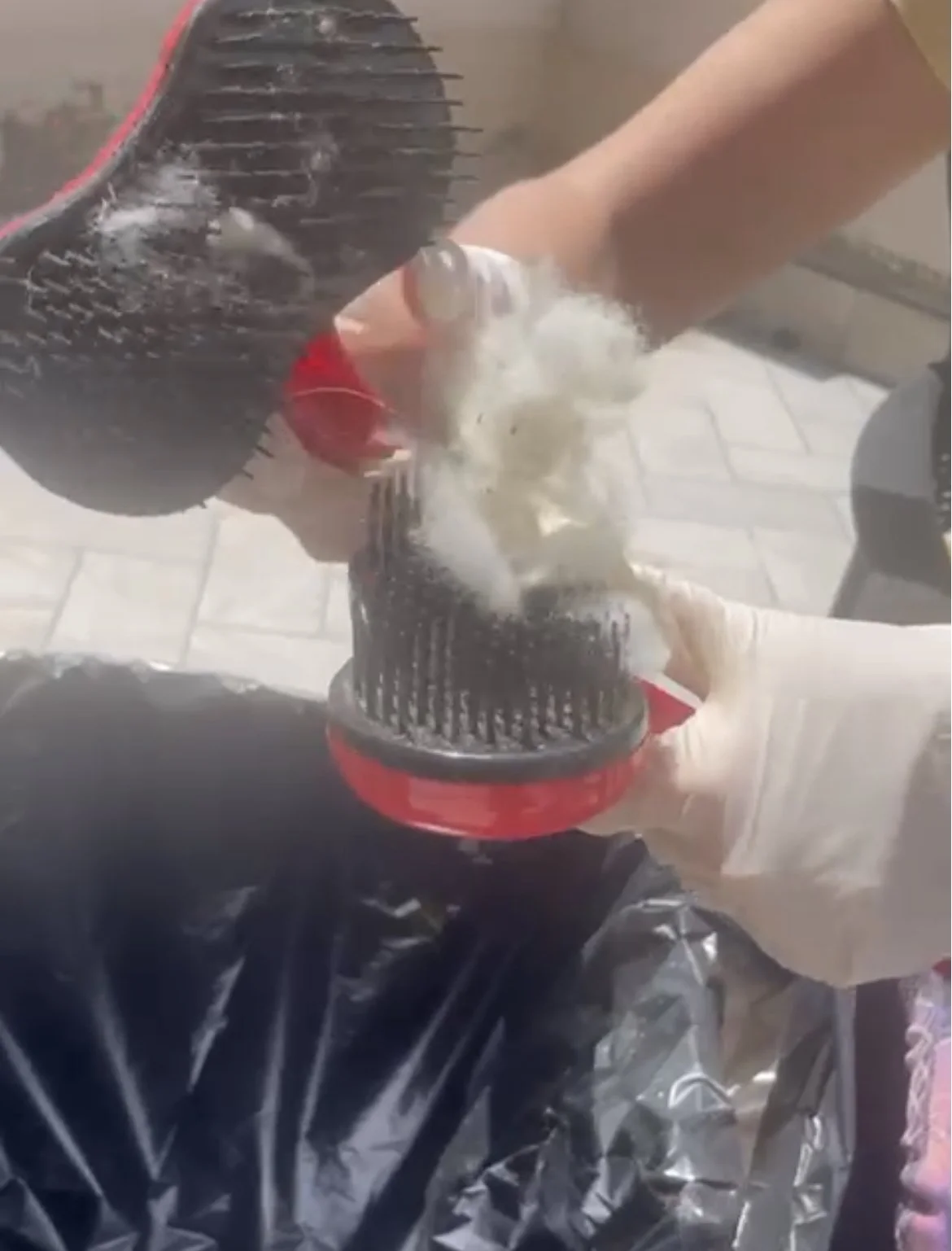
So, I wanted to post my process of brushing/carding the wool. Each time I do this I learn more about how to improve this process. I now brush/card the wool on a towel which allows me to get more of the wool clean. I have also invested in a wool roller. A manual machine which I will feed the wool into and it will help to remove the debris. I hope to film this process once the machine arrives!
I have also finally invested in wire brushes, the dog brushes have been highly effective but to get rid of the smaller pieces of hay I needed something that would do the job.
Once the wool is free of debris it is now ready for the dyeing process.
All videos of the complete process are on my social media channels under Abruzzo Shepherd Art.